Refuse to answer questions
Refuse to answer questions is a defining trait of the Little Prince, first described in the narrator's final appeal to readers. It marks the prince as a being of mystery and wonder, resistant to adult interrogation, and it becomes a key to the story's central enigma—whether the sheep has eaten the rose. This trait underscores the prince's childlike, philosophical nature and the profound, unanswerable questions at the heart of the tale.
The Trait and Its Introduction
The narrator introduces this trait in his closing address, telling readers that if they ever encounter a little man who "refuses to answer questions," they will know it is the Little Prince. This description comes at the very end of the narrative, after the prince has already disappeared from Earth. The trait is thus presented as a lasting, recognizable feature, one that survives the prince's physical departure. It is coupled with other distinctive markers—the prince's laughter, his golden hair—but the refusal to answer questions stands out as a behavioral signature, a way to identify him even in the vastness of the African desert.
The refusal is not merely stubbornness; it is a form of resistance to the adult world's demand for explanation. Throughout the book, the prince's questions and silences challenge the narrator's grown-up assumptions. By refusing to answer, the prince preserves his own mystery, refusing to be pinned down by the logic of adults. This trait aligns with the narrator's earlier observation that "no grown-up will ever understand" the importance of the sheep-and-rose question. The prince's silence is a shield for the ineffable.
The Central Enigma: The Sheep and the Rose
The trait becomes crucial in the story's central unresolved question: has the sheep eaten the flower? The narrator, after drawing the muzzle for the prince, forgets to add the leather strap, so the prince can never fasten it on his sheep. This oversight leaves the fate of the rose uncertain. The narrator oscillates between hope and fear: at one moment he imagines the prince carefully shutting his flower under her glass globe every night and watching over his sheep, and he is happy; at another, he fears that on some evening the prince forgot the glass globe, or the sheep got out silently in the night, and then "the little bells are changed to tears."
The prince's refusal to answer questions is intimately tied to this uncertainty. If the prince were present, one could ask him directly—but he is gone, and his silence is permanent. The narrator's appeal to readers—"Ask yourselves: is it yes or no? Has the sheep eaten the flower?"—echoes the prince's own method of posing unanswerable questions. The prince's trait thus becomes a model for the reader's engagement with the story: some questions must be lived with, not resolved.
The Prince's Nature and the Reader's Role
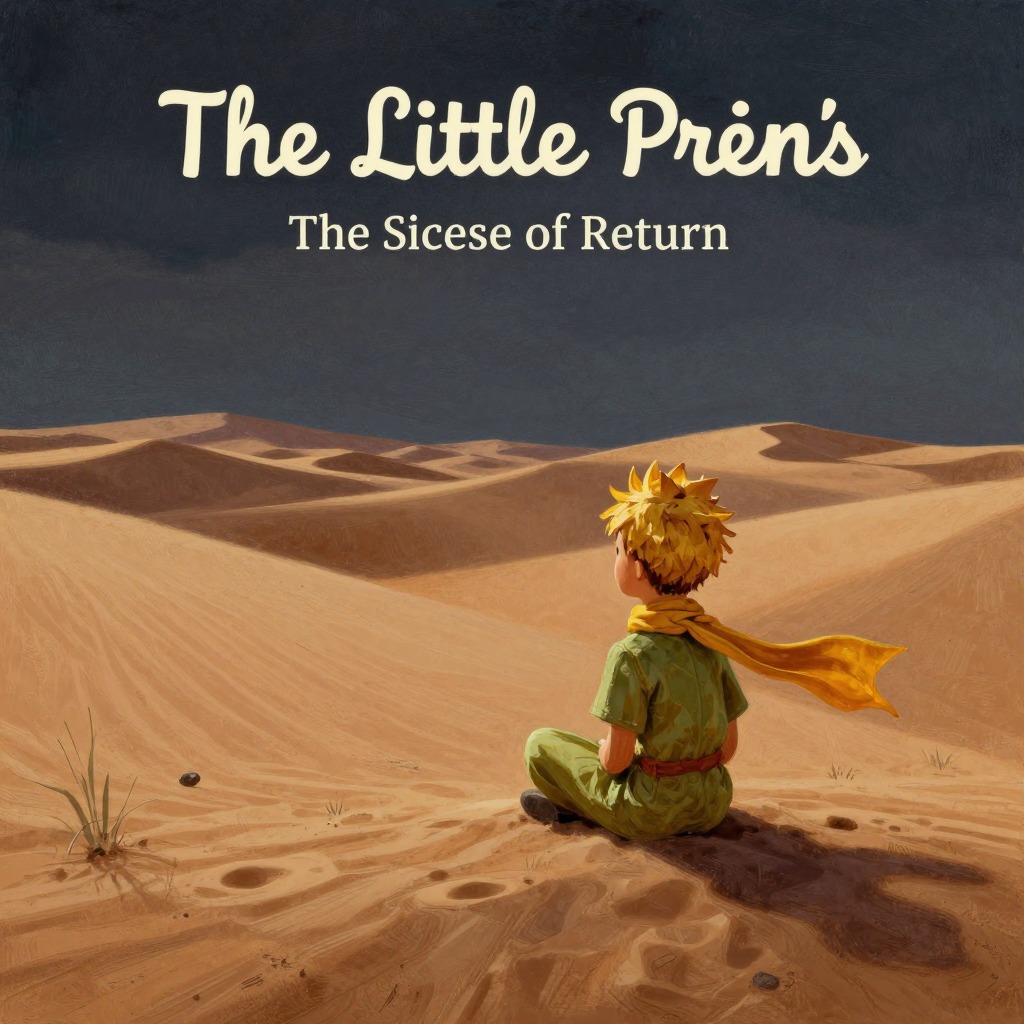
The refusal to answer questions is a mark of the prince's otherness. He is a being who appears on Earth and disappears, leaving behind only a landscape and a memory. The narrator describes this spot as "the loveliest and saddest landscape in the world," and he draws it again to impress it on the reader's memory. The prince's silence is part of that landscape—an absence that speaks. The narrator's instruction to wait "exactly under the star" and to send word if the prince returns suggests that the prince's mystery is meant to persist, not to be solved.
For the reader, the prince's refusal to answer questions is an invitation to embrace uncertainty. The narrator notes that "nothing in the universe can be the same if somewhere, we do not know where, a sheep that we never saw has—yes or no?—eaten a rose." This cosmic stakes of the question—whether a sheep ate a rose—is precisely the kind of thing a grown-up would dismiss, but the prince's silence elevates it to the level of ultimate concern. The trait thus functions as a philosophical stance: some truths are not to be interrogated but to be contemplated.
The Trait's Thematic Significance
The refusal to answer questions is a key to the book's meditation on childhood, loss, and the limits of knowledge. The prince, who asks so many questions of others, refuses to answer them himself, inverting the adult-child dynamic. His silence is a form of wisdom, a recognition that some things—love, responsibility, the fate of a rose—cannot be captured in words. The narrator's grief is tempered by this understanding: he knows the prince returned to his planet, because he did not find his body at daybreak, and he takes comfort in listening to the stars, which sound like "five hundred million little bells." The prince's refusal to answer is thus not a denial but a gift: it keeps the mystery alive, and with it, the possibility of wonder.
In the end, the trait is what makes the prince recognizable and unforgettable. The narrator's plea—"please comfort me. Send me word that he has come back"—is addressed to a future reader who might meet the prince. That reader will know him by his laughter, his golden hair, and his refusal to answer questions. The trait is thus a sign of hope, a promise that the prince's mystery endures, and that the question of the sheep and the rose remains open, like the stars themselves.